Story from Data.
Hi, Erich here.
I’m coming off a very busy Boston AI Week.
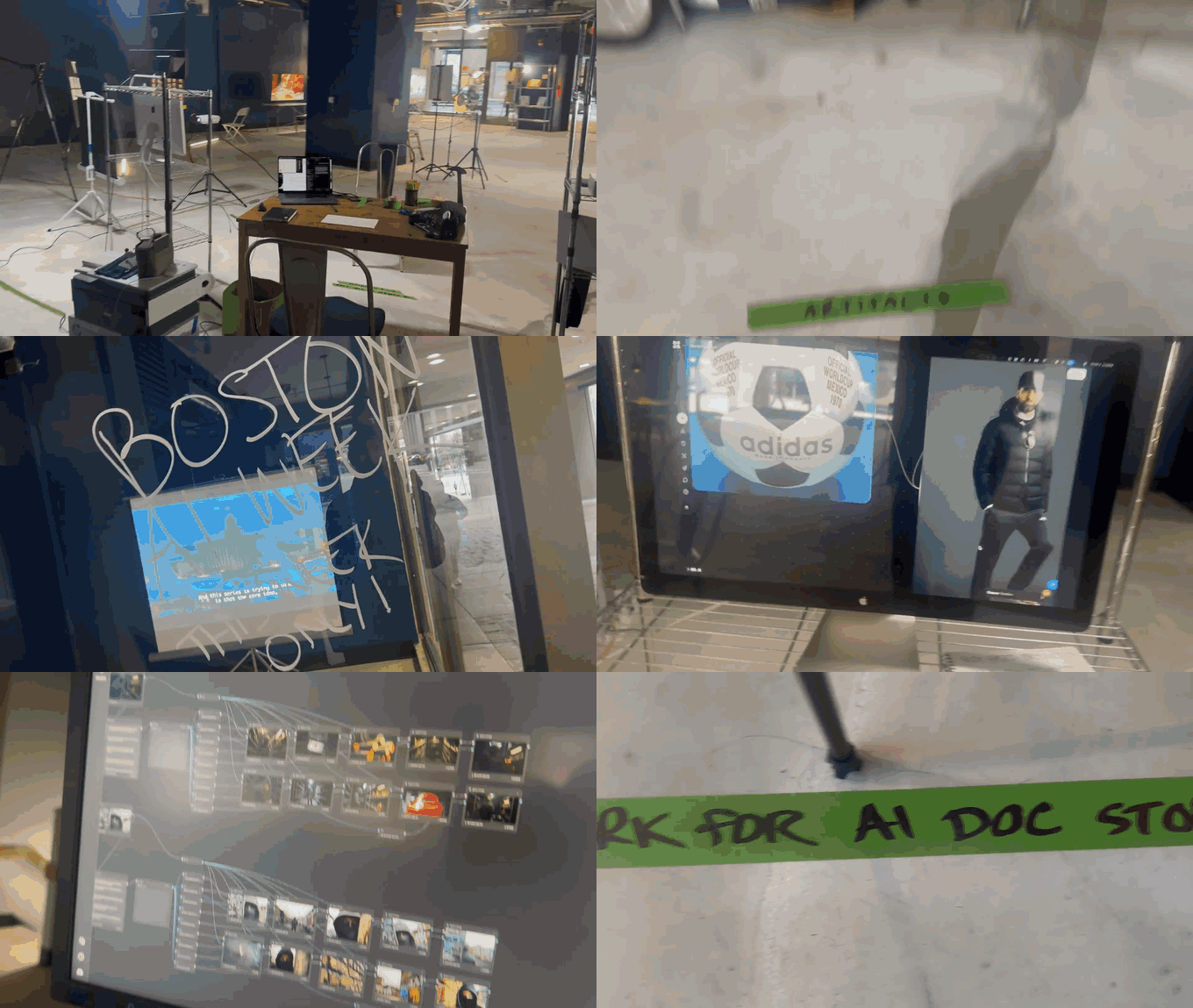
GENERATION, my AI and Storytelling exhibit, ran for five days at One Center Plaza in Government Center.
It was an amazing experience, with only one physical altercation!
I had the chance to talk with all kinds of people from all walks of life about AI. I was also able to get a really good sense of which aspects of my work resonate with people most.
The Stories of Government Center.
By far the biggest hit was the demonstration of AI’s ability to uncover and tell true stories that are well suited for AI production.
After Rufus, my first AI documentary, I wanted to understand AI’s role in documentary production, and that meant figuring out the rules. Most of the old rules of documentary still apply. The story is established by the evidence, and the evidence has to be strong enough that the core facts are not in dispute. The new rules are about the pictures. AI reconstructs what a place and a moment looked like, the facts of what happened come from the record, and every reconstructed image is disclosed as one. The framework that came out of it is the foundation of the Historical Resurrection Project, and it was a handout in the exhibit.
I used those rules to write a research prompt. A story has to be true. It has to rest on at least two independent sources. It has to have happened before anyone could film it. I gave the prompt one location, Government Center, right outside the front door, and the look I wanted for the images.
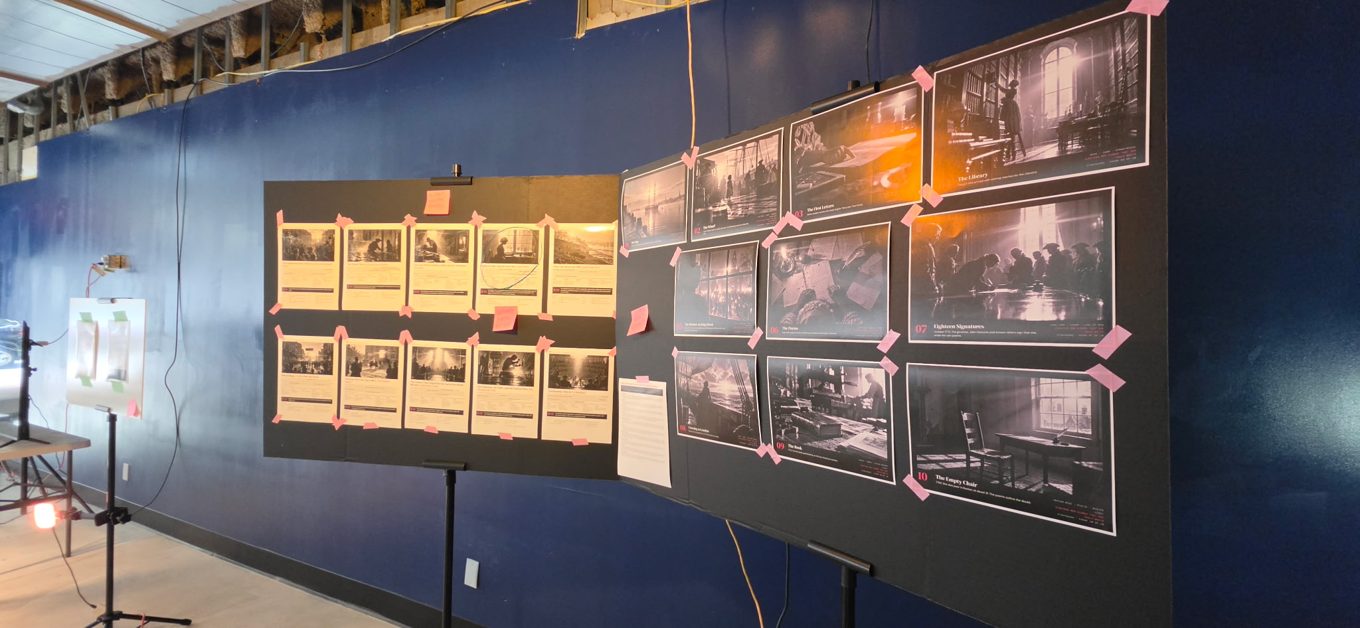
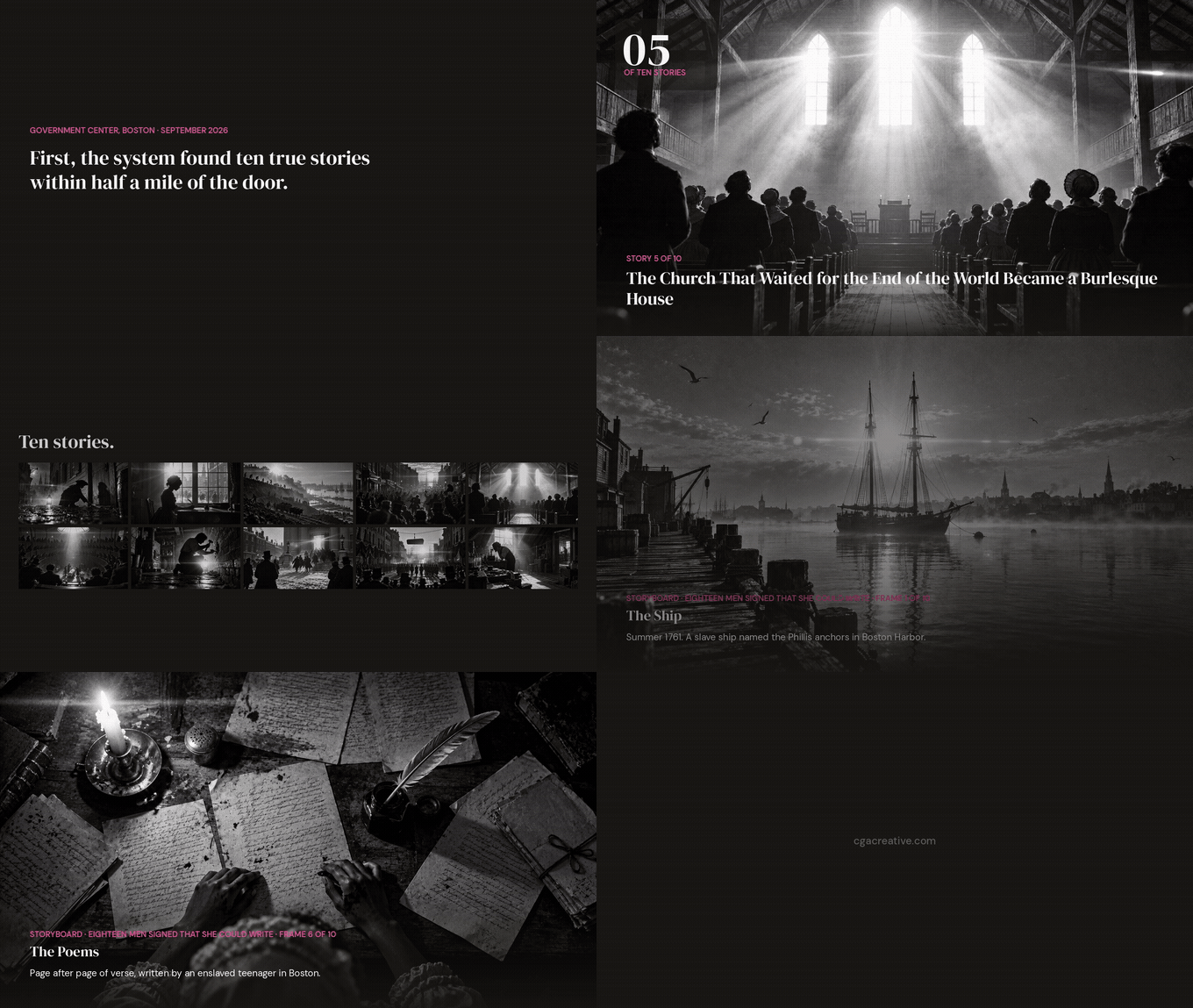
It came back with ten true stories, all within half a mile of the exhibit. Each story became a one-page treatment with the who, what, when, where and why, and the WTF, which is the part that makes the story worth telling.
Did you know that sixteen-year-old Ben Franklin wrote fourteen letters to his brother’s newspaper as a middle-aged widow, and readers wrote in to propose marriage to her? Eighteen of the most powerful men in Boston, John Hancock among them, signed a paper swearing that a teenage girl had written her own poems. A church built to wait for the end of the world became the most famous burlesque house in the city.
To see the ten Government Center treatments, click here.
I printed all ten and taped them to the board on the left. The first visitor in the exhibit door on Monday picked the story of Phillis Wheatley, the enslaved teenager whose poems those eighteen men had to vouch for before a publisher would print them. I gave that story to Brief, my storyboard tool, and it produced the ten frames that went up on the board on the right.
Every neighborhood has these stories. The records are public, the stories are true, and nobody has filmed them. That’s one of the most exciting opportunities AI production presents.
Personalized Video at Scale.
The other thing that resonated with people was the project I was working on while I was there.
I was working with a university’s footage and its database of thousands of admitted students, and I built a personalized short film for each one, with their name, their hometown and what they’re into.
The school’s CRM has a record for each student: where they’re from, what they applied to study, what they wrote about. The system reads that record, picks the campus footage that fits it, fills in the lines, and renders a film for that one student. One set of footage, one template, and a different film for every record on the list.
Video has always been the most powerful way to reach people, and the most expensive. That’s why most organizations make one film for everyone, and most of their best stories never get told. AI-native production rewrites that math. One production now makes a personalized film for every person on the list, the finished films come back in days instead of months, and when something needs to change I change the asset instead of the budget.
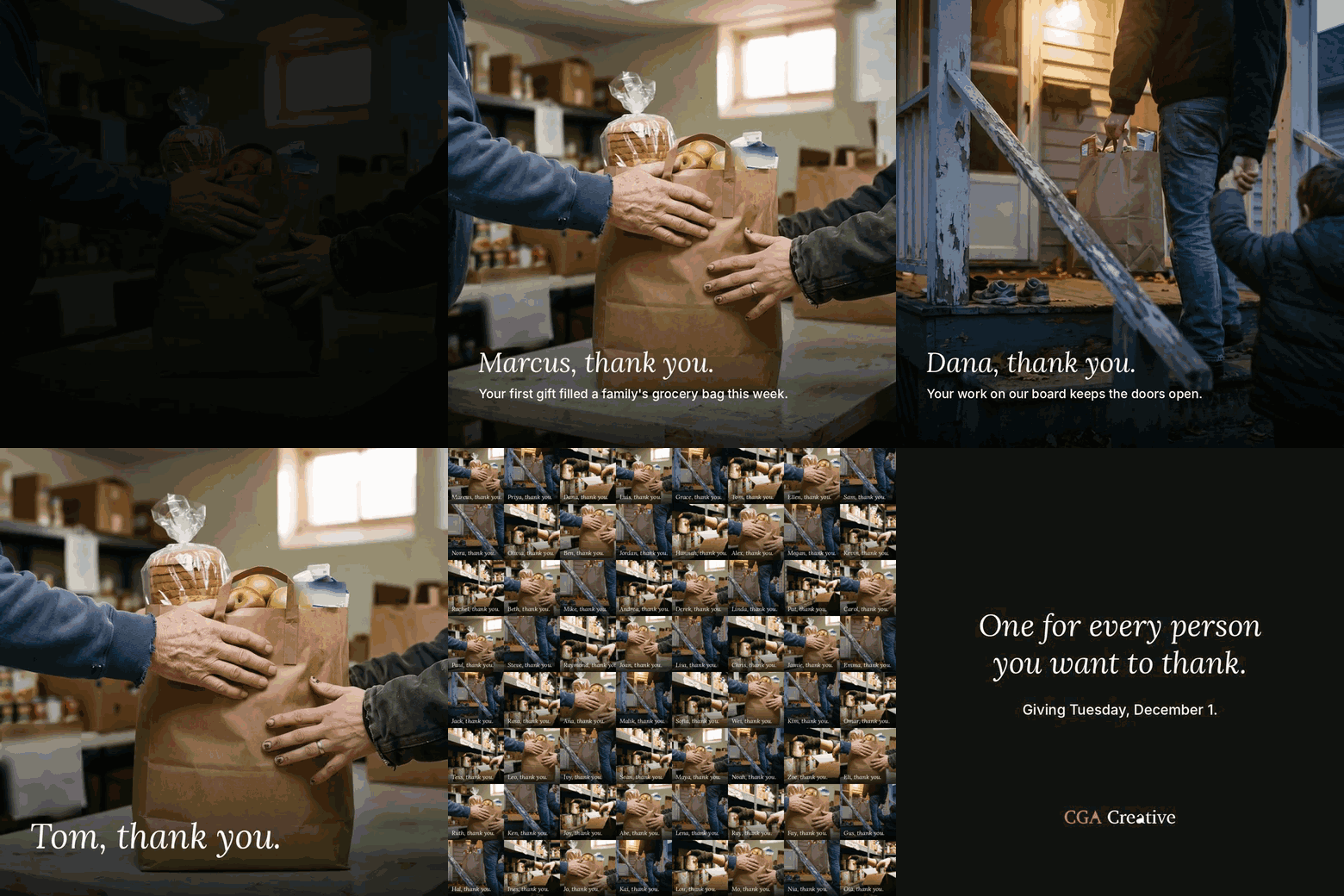
That’s the nonprofit version. Each donor’s record picks the shots, the line under the name says what their gift did, and the whole list goes out before Giving Tuesday on December 1.