Ten treatments
The Stories of Government Center.
Ten true stories found by my Historical Resurrection Project research prompt for GENERATION, September 28 to October 2, 2026. Every one happened within about half a mile of One Center Plaza, rests on at least two independent sources, and happened before anyone could film it. Each treatment has the who, what, when, where and why, and the WTF, which is the part that makes the story worth telling.
01
The Widow Was a Sixteen-Year-Old Boy
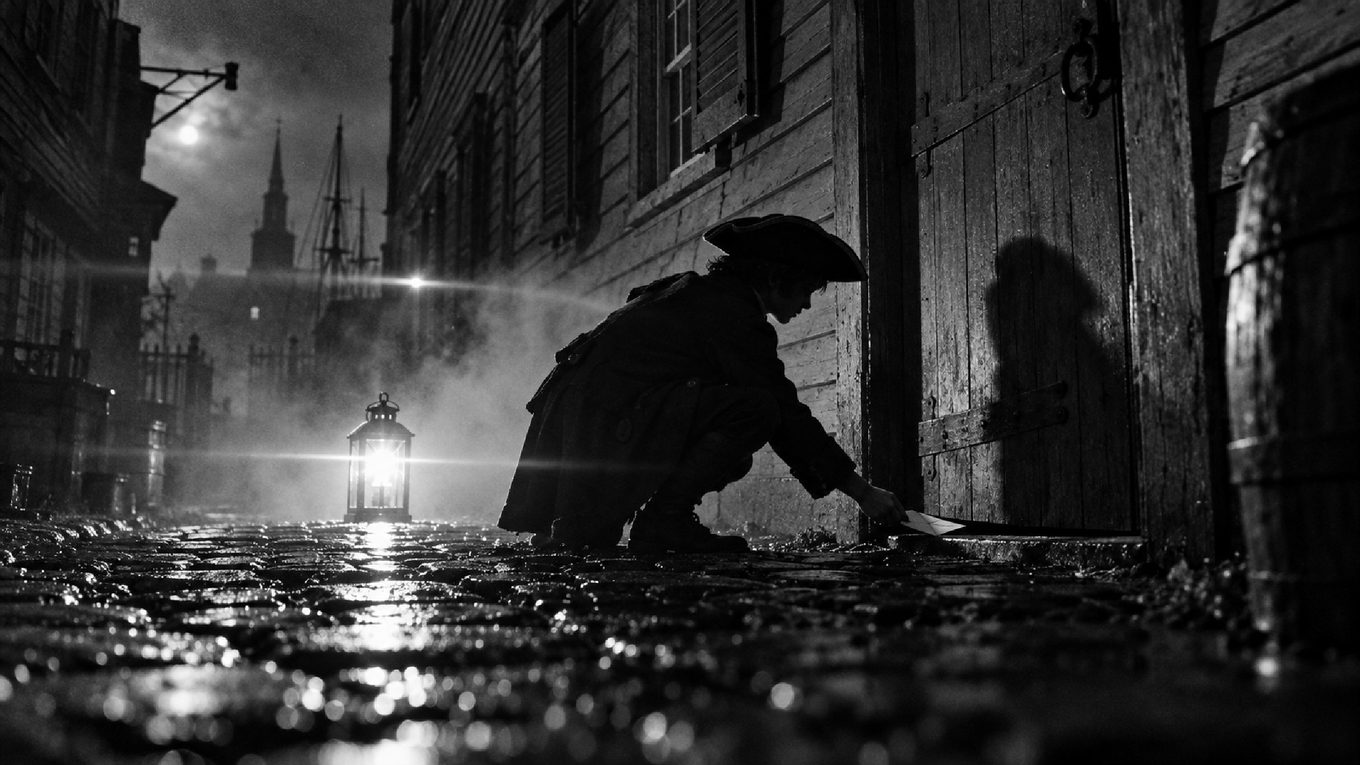
In 1722 Benjamin Franklin, then 16 and apprenticed to his brother James, wrote fourteen letters as “Silence Dogood,” a middle-aged country widow. He disguised his handwriting and slipped each one under the printing-house door at night. James printed them in the New-England Courant, men wrote in offering to marry the widow, and when James learned the truth he was furious. The Courant had been founded in August 1721 largely to attack smallpox inoculation.
- Who
- Benjamin Franklin; his brother James Franklin.
- What
- America’s most famous founder published his first writing as a fictional woman.
- When
- April to October 1722.
- Where
- James Franklin’s shop on Queen Street, today Court Street at Franklin Avenue, about 300 yards from Center Plaza.
- Why
- Ben wanted to write and knew James would never print him under his own name.
- WTF
- Readers proposed marriage to a teenage boy, and the paper he learned his trade on had been launched to fight a lifesaving vaccine.
Chronology Aug 7, 1721: first Courant, attacking inoculation. Apr 2, 1722: first Dogood letter. June 1722: James jailed about three weeks; Ben runs the paper. Oct 1722: last letter. Feb 11, 1723: paper moved into Ben’s name after James is forbidden to publish. Sept 1723: Ben runs away to Philadelphia.
02
Eighteen Men Signed That She Could Write
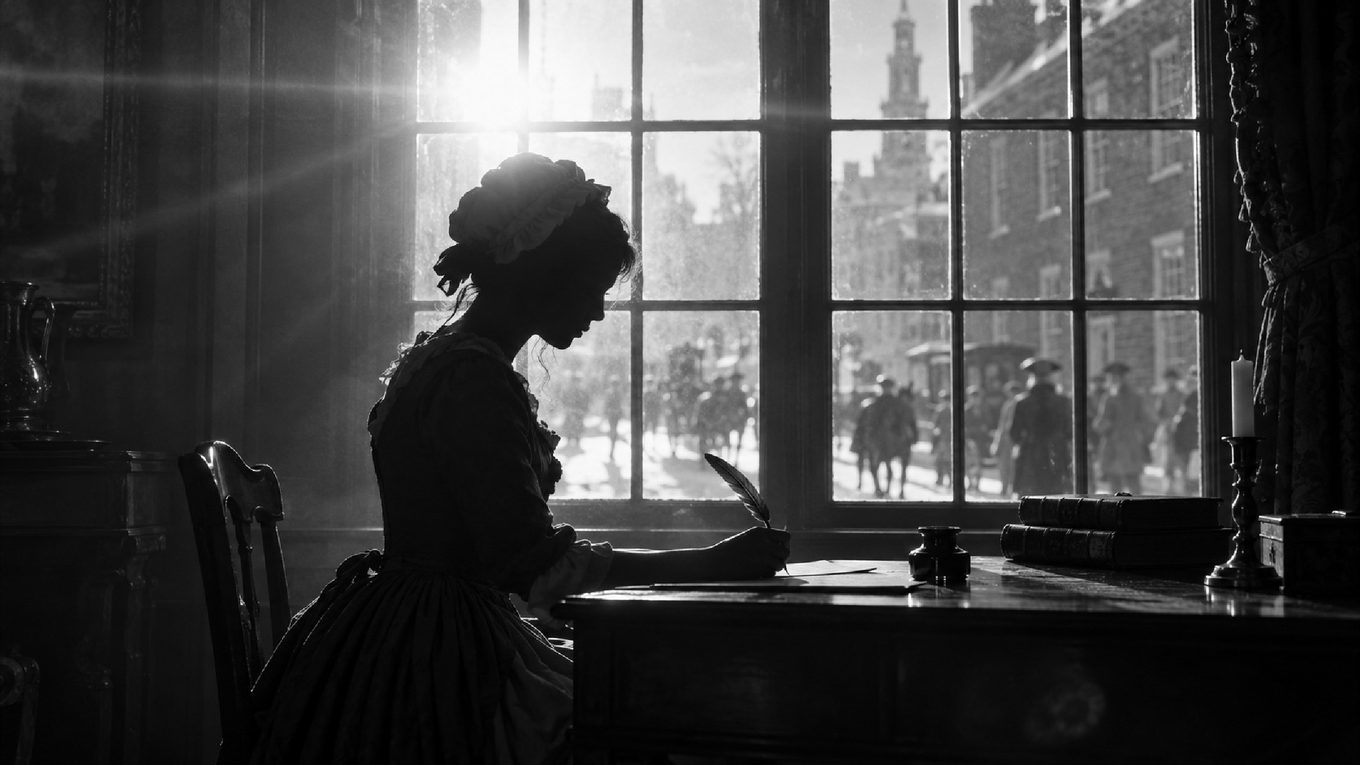
A West African girl of about seven was sold off the slave ship Phillis in 1761 and named after it by John and Susanna Wheatley. Within 16 months she read English, then Latin and Greek. In October 1772 eighteen of Boston’s most powerful men, including Governor Thomas Hutchinson and John Hancock, signed an attestation that she had written her own poems. Boston would not publish her; London did, in 1773, making her the first African American woman to publish a book. She died in poverty in Boston in 1784.
- Who
- Phillis Wheatley; the eighteen signers.
- What
- The first book by an African American woman required a certificate of authenticity.
- When
- 1761 to 1784.
- Where
- The Wheatley house at King Street and Mackerel Lane, today State and Kilby, about a quarter mile from Center Plaza.
- Why
- White Boston would not believe an enslaved African woman wrote poetry.
- WTF
- The famous “oral examination” may never have happened; recent scholarship reads the attestation as a publisher’s marketing tool, and she never wrote a word about it. The honest version is more unsettling than the legend.
Chronology 1761: arrives on the Phillis. 1767: first poem published. Oct 1772: attestation signed. Sept 1773: Poems on Various Subjects published in London. c.1773 to 1774: freed. 1784: dies in Boston.
03
They Cut Down the Hill Under Your Feet
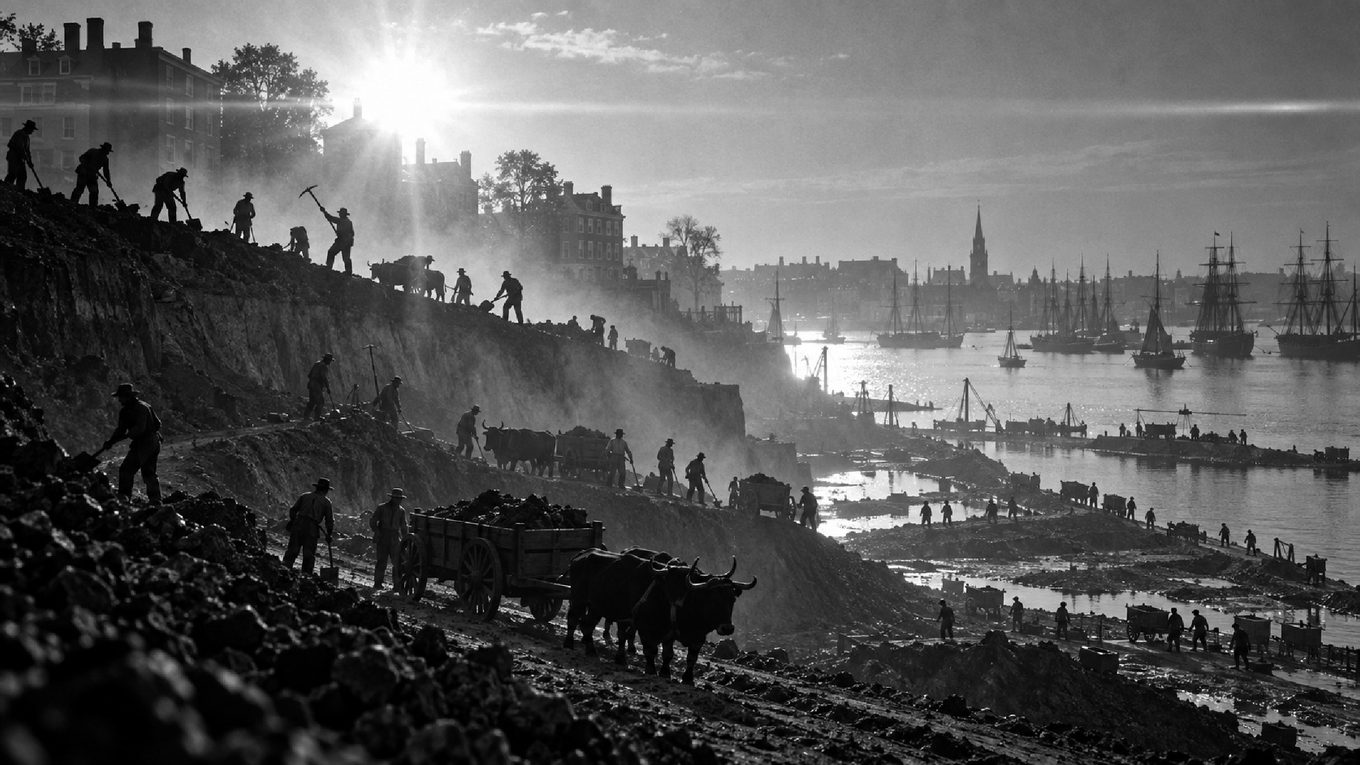
Center Plaza stands where Pemberton Hill, also called Cotton Hill, once rose as part of Boston’s original three-peaked ridge. In 1835 merchant Patrick Tracy Jackson had the top shaved off in about five months, and the earth was carted downhill to fill the North Cove, creating the land now called the Bulfinch Triangle. On the flattened top he built Pemberton Square, a curved row of elegant houses. The courthouse took the west side in 1885, and in 1969 Center Plaza replaced the rest, its long curve echoing the square it erased.
- Who
- Patrick Tracy Jackson; the laborers and ox teams who moved the hill.
- What
- A hill was moved into the harbor to make new land and new real estate.
- When
- 1835.
- Where
- Exactly beneath Center Plaza and the John Adams Courthouse.
- Why
- Money. Level land sold; hills did not.
- WTF
- The building hosting this exhibit is shaped like a ghost of the neighborhood it destroyed, standing on a hill that no longer exists, and it happened four years before photography was invented.
Chronology 1600s: Cotton Hill part of the Trimountain. 1832: Gardiner Greene dies; Jackson buys the estate. Spring to Oct 1835: hill lowered. 1836: Pemberton Square houses designed by George Minot Dexter. 1885: west side razed for the courthouse. 1969: remaining houses razed for Center Plaza.
04
The Gentlemen Who Tried to Lynch a Newspaper Editor
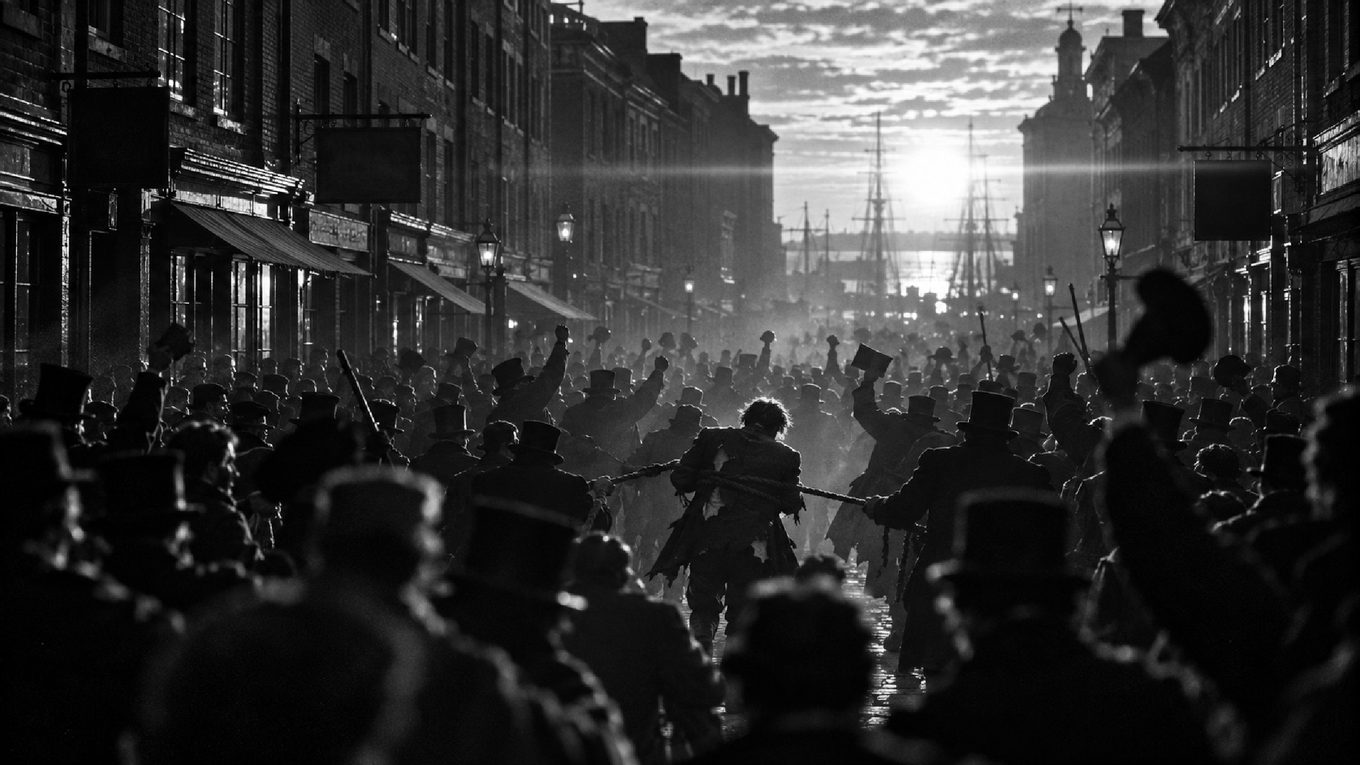
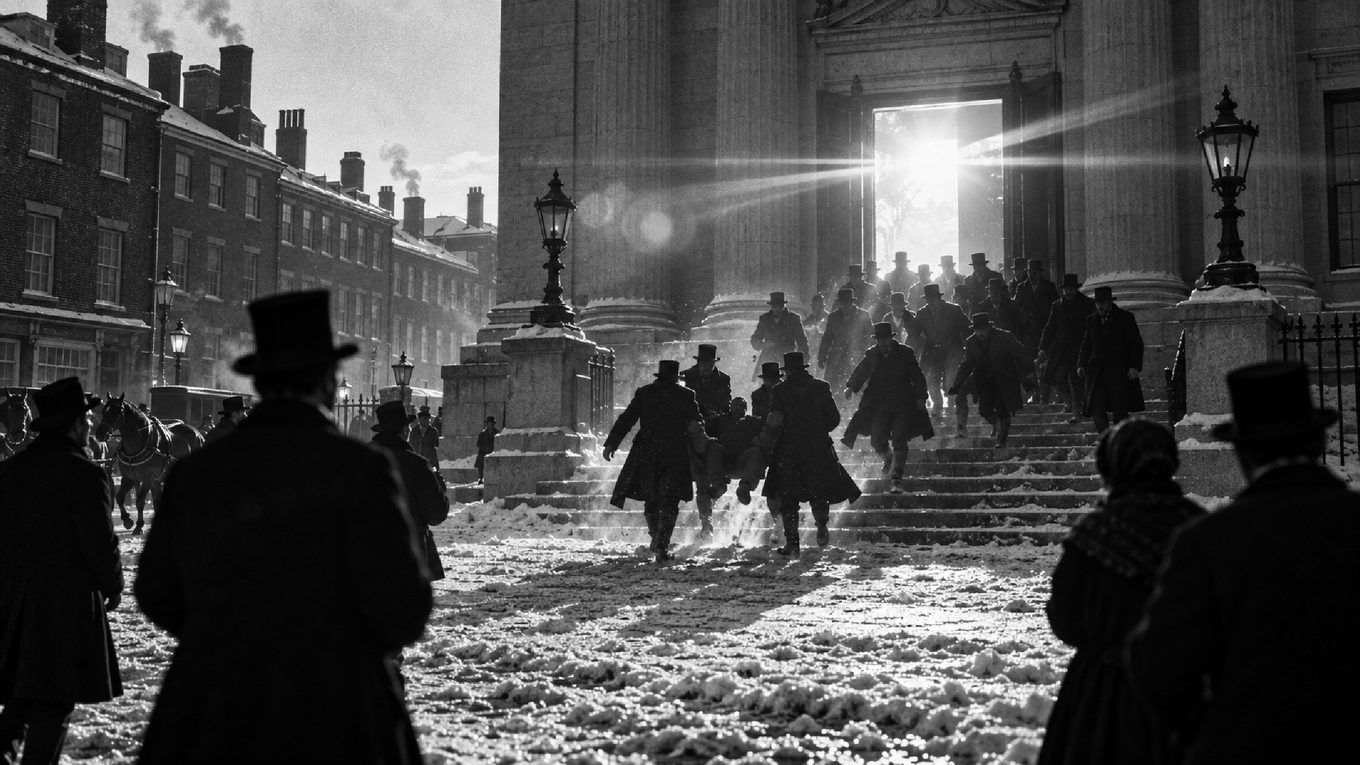
On October 21, 1835, a mob of 1,500 to 5,000, famously “gentlemen of property and standing,” surrounded a meeting of the Boston Female Anti-Slavery Society at 46 Washington Street, hunting a British abolitionist who had not come. They found William Lloyd Garrison instead. He fled out a back window into a carpenter’s shop, was dragged out, a rope was put on him, and he was hauled through the streets. The mayor saved him by jailing him. On his cell wall Garrison wrote that he was put there “to save him from the violence of a ’respectable and influential’ mob.”
- Who
- William Lloyd Garrison; Mayor Theodore Lyman; the women of the society, led by Maria Weston Chapman.
- What
- Boston’s elite rioted to protect slavery.
- When
- October 21, 1835.
- Where
- Washington Street at Cornhill, the edge of today’s City Hall Plaza, then to the Old State House, then Leverett Street Jail.
- Why
- Boston’s money ran on Southern cotton.
- WTF
- The mob wore suits, the victim was saved by being arrested, and the “Cradle of Liberty” did it.
Chronology Afternoon, Oct 21: meeting opens; mob gathers. Women leave arm in arm through the crowd. Garrison escapes out back, is found, roped, dragged. Mayor takes him into City Hall. Evening: carried by coach under guard to Leverett Street Jail. Next day: leaves Boston.
05
The Church That Waited for the End of the World Became a Burlesque House
In 1843 followers of William Miller built a tabernacle on Howard Street to await the Second Coming, which Miller’s movement fixed for October 22, 1844. When the world did not end, the building became the Howard Athenaeum theater in 1845, burned in February 1846 when a stage “sun” set the scenery alight, and was rebuilt in granite. The theater went on to host opera and Shakespeare, then vaudeville, then burlesque. In 1953 the vice squad secretly filmed a performer called Irma the Body, and the city pulled the license. It burned in 1961 and was razed for Government Center.
- Who
- The Millerites; architect Isaiah Rogers; a century of performers.
- What
- A building for the apocalypse became Boston’s most famous strip house.
- When
- 1843 to 1962.
- Where
- Howard Street, now under Center Plaza; a plaque marks the site at One Center Plaza, next door to this exhibit.
- Why
- The prophecy failed and the building was for sale.
- WTF
- The same ground went from people waiting in white for the end of days to the “Old Howard,” and the only film record is a police sting.
Chronology 1843: tabernacle built. Oct 22, 1844: the Great Disappointment. Oct 13, 1845: opens as a theater. Feb 1846: fire. Oct 1846: granite theater opens. Late 1800s: shift to vaudeville and burlesque. 1953: license pulled. June 20, 1961: fire. 1962: demolished.
06
“Gentlemen, This Is No Humbug”
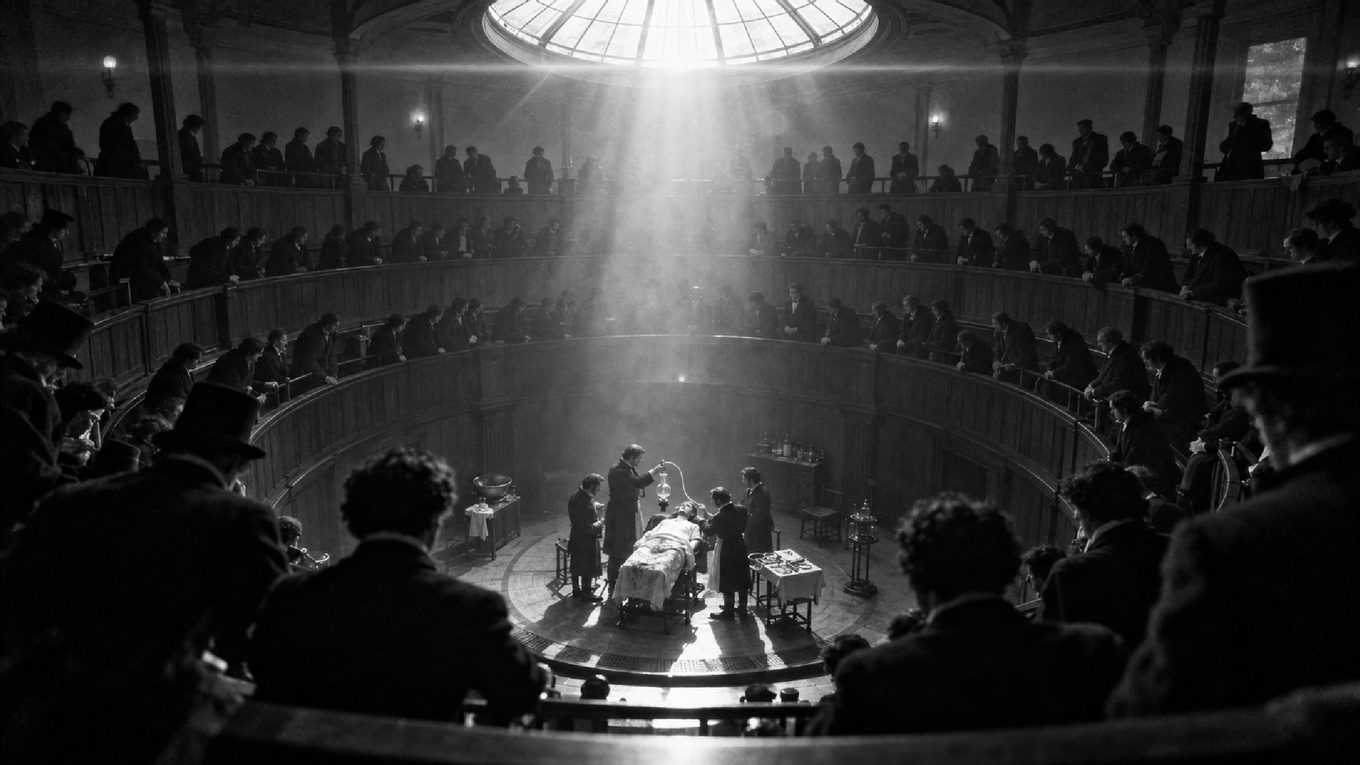
On October 16, 1846, in the operating theater atop Massachusetts General Hospital, dentist William T. G. Morton put a young printer named Gilbert Abbott to sleep with ether, and surgeon John Collins Warren removed a tumor from his neck while he felt almost nothing. Morton arrived late and Warren greeted him with “Your patient is ready.” Morton had disguised the ether with aromatic oils, named it “Letheon,” and tried to patent it. The patent failed, credit wars followed, and Morton died broke in 1868. The famous photographs of the room were restaged afterward.
- Who
- Gilbert Abbott; William Morton; John Collins Warren.
- What
- The first public demonstration of surgical anesthesia.
- When
- October 16, 1846.
- Where
- The Ether Dome, Bulfinch Building, MGH, about half a mile up Cambridge Street.
- Why
- Surgery until then meant being held down awake.
- WTF
- The gift that ended surgical pain was disguised with perfume to protect a patent, and the room’s longtime witness was an Egyptian mummy.
Chronology 1845: Horace Wells’s nitrous oxide demonstration fails in the same theater. Oct 16, 1846: ether operation. Oct 27, 1846: Morton applies for a patent. Months later: restaged daguerreotypes. 1868: Morton dies in New York.
07
The Professor, the Debt, and the Janitor Who Dug Through the Wall
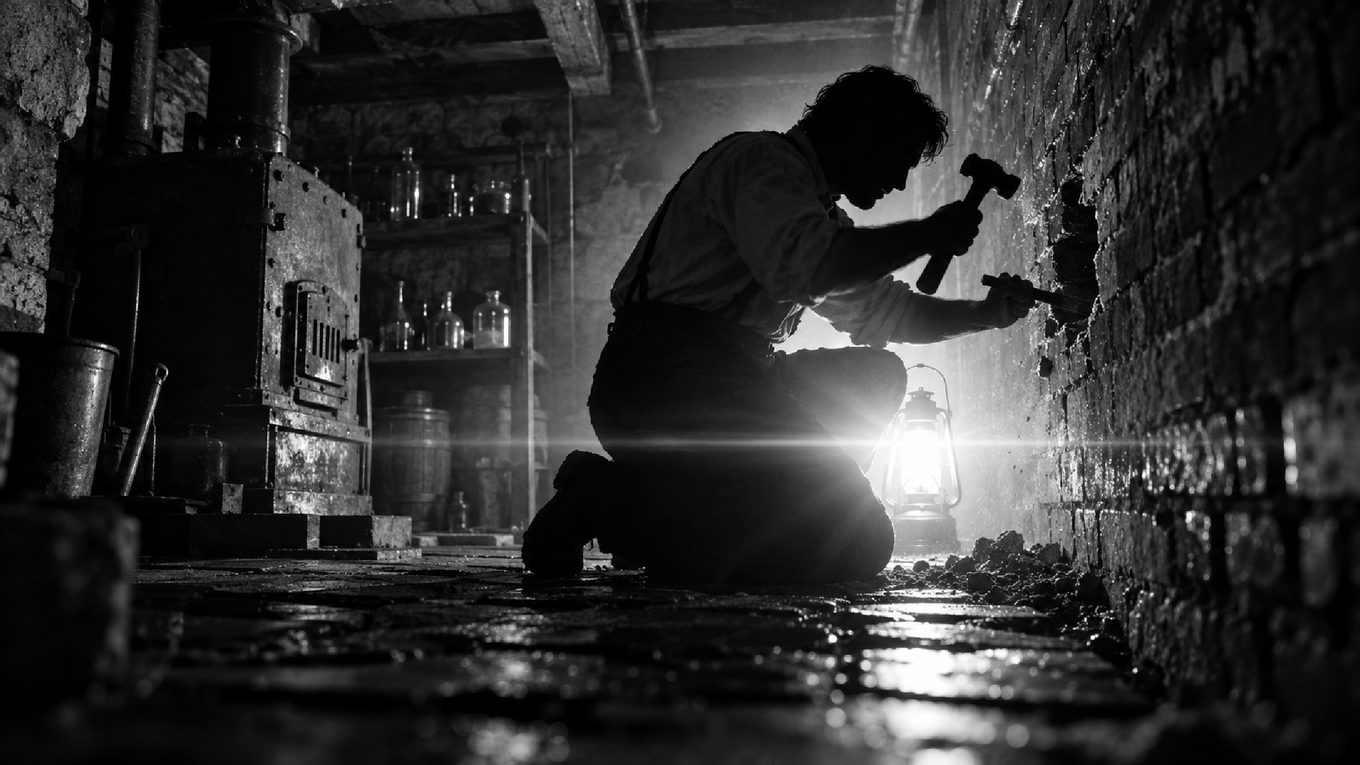
On November 23, 1849, George Parkman, one of Boston’s richest men, walked into Harvard Medical College to collect a debt from chemistry professor John White Webster and never came out. The janitor, Ephraim Littlefield, grew suspicious and chiseled through the wall of the privy vault under Webster’s lab, where he found human remains. A jawbone with false teeth was pulled from the lab furnace, and Parkman’s dentist, Nathan Keep, matched it to the mold he had made in 1846. Webster was hanged in August 1850. Charles Dickens later asked to see the room.
- Who
- George Parkman; Professor John White Webster; janitor Ephraim Littlefield; dentist Nathan Keep.
- What
- A Harvard professor murdered his creditor; the first American murder conviction built on forensic dentistry.
- When
- 1849 to 1850.
- Where
- Harvard Medical College, North Grove Street, about half a mile from Center Plaza.
- Why
- A debt of a few hundred dollars.
- WTF
- The case was cracked by a janitor with a chisel and a dentist holding a plaster mold, and over 50,000 people came through to watch the trial.
Chronology Nov 23, 1849: Parkman disappears. Nov 28 to 30: Littlefield breaks through the wall. Dec 1: inquest, jawbone. Jan 26, 1850: indictment. Mar 19 to Apr 1: trial. Aug 30, 1850: hanging at Leverett Street Jail.
08
Arrested After Serving Coffee, Freed Before Supper
Shadrach Minkins escaped slavery in Norfolk, Virginia, in 1850 and became a waiter at the Cornhill Coffee House. On February 15, 1851, a federal deputy arrested him minutes after he served the officers coffee, making him the first person seized in New England under the new Fugitive Slave Law. That same day a group of Black Bostonians led by Lewis Hayden rushed the courtroom, overpowered the guards, and carried him out. He was hidden in a Beacon Hill attic, then passed through Cambridge, Concord, and Leominster, and reached Canada within a week. He lived free in Montreal as a barber and restaurateur until 1875.
- Who
- Shadrach Minkins; Lewis Hayden; attorney Robert Morris.
- What
- A courtroom rescue of a man seized under federal law.
- When
- February 15, 1851.
- Where
- Cornhill, now City Hall Plaza, and the courthouse on Court Square, both within a few hundred yards of Center Plaza.
- Why
- Boston’s Black community refused to let the law take one of their own.
- WTF
- He was a free man again within hours of his arrest, and there is no known image of him, so he has never been seen.
Chronology May 1850: escapes Norfolk. Feb 15, 1851: arrest at the coffee house; courtroom rescue; hidden in Beacon Hill. Feb 16: Concord and Leominster. Feb 21: Canada. Dec 13, 1875: dies in Montreal; unmarked grave.
09
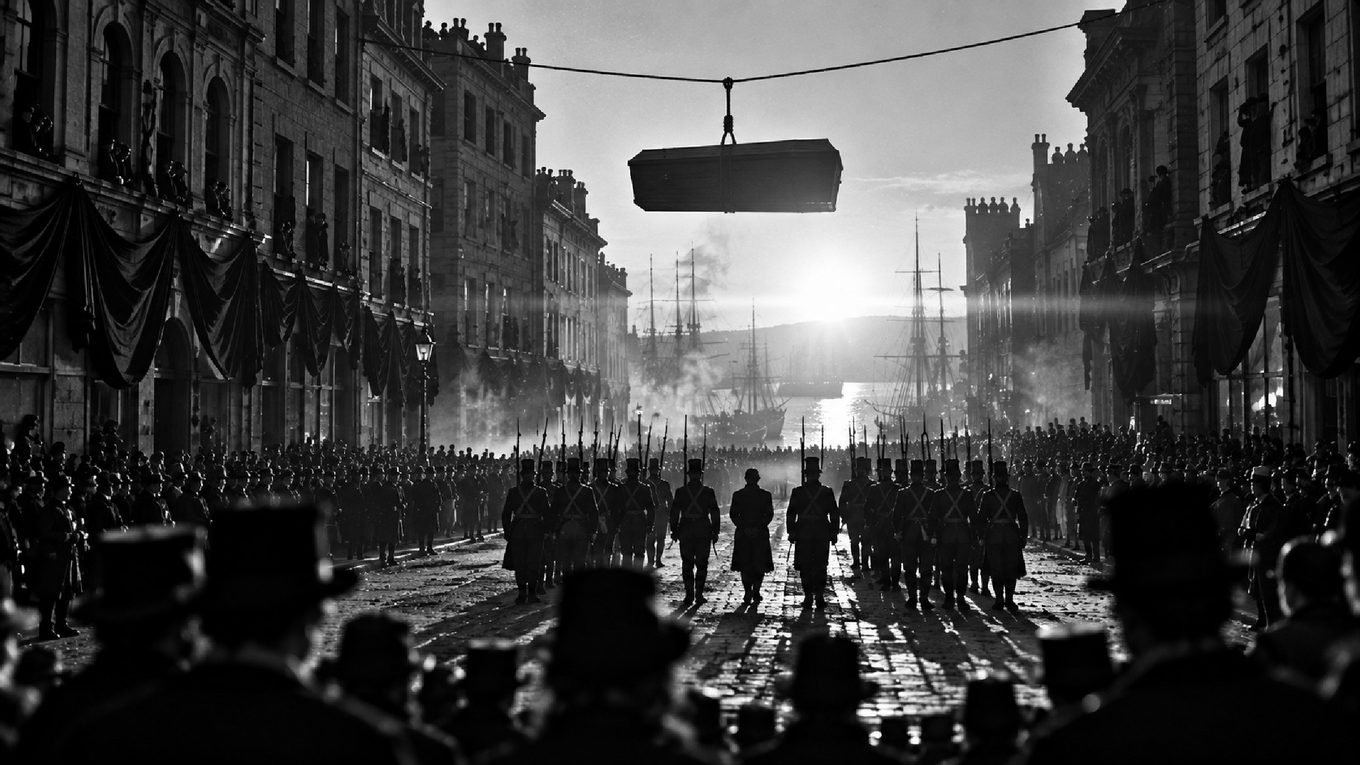
Boston Hung a Coffin Over the Street
On May 24, 1854, federal marshals seized Anthony Burns on a false robbery charge; the real charge was escaping slavery. Two nights later, after a mass meeting at Faneuil Hall, abolitionists attacked the courthouse with a battering ram, and a deputy, James Batchelder, was killed. On June 2 the commissioner ruled for the enslaver, and federal troops marched Burns to Long Wharf past about 50,000 people, with buildings draped in black and a coffin labeled “Liberty” hanging over the street. A textile heir wrote that Boston went to bed conservative and “waked up stark mad Abolitionists.” Boston bought Burns’s freedom the next year.
- Who
- Anthony Burns; enslaver Charles Suttle; Commissioner Edward Loring; the crowd.
- What
- The rendition that turned Boston.
- When
- May 24 to June 2, 1854.
- Where
- The Court Square courthouse, then down State Street past the Old State House to Long Wharf.
- Why
- The federal government spent enormously to prove the Fugitive Slave Law would be enforced in Boston.
- WTF
- It took an army to return one man, the city watched in mourning, and it paid to free him within a year.
Chronology May 24, 1854: arrest. May 26: Faneuil Hall meeting; courthouse attack; Batchelder killed. June 2: ruling and march to Long Wharf. Feb 1855: freedom purchased for $1,300. Oberlin, ministry. July 27, 1862: dies at 28 in St. Catharines, Ontario.
10
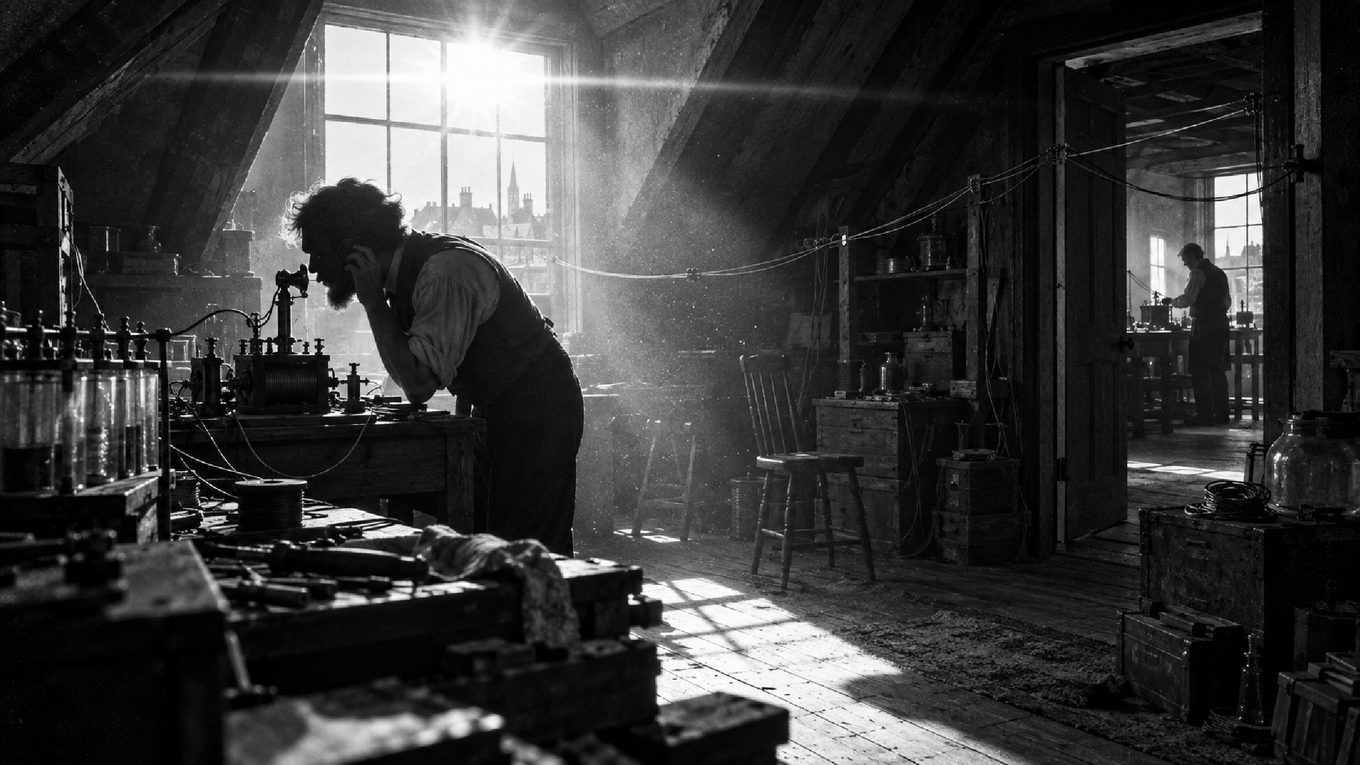
The Attic Where Edison Failed and the Telephone Twanged
Charles Williams Jr.’s electrical shop at 109 Court Street was Boston’s workshop for inventors. In 1868, 21-year-old Thomas Edison worked there on his first patent, an electric vote recorder; a congressional chairman told him “it won’t do,” because slow voting was how they killed bad bills. Seven years later, on June 2, 1875, in the fifth-floor garret of the same building, Thomas Watson plucked a stuck reed and Alexander Graham Bell, sixty feet away, heard its twang come through the wire. Bell shouted, “What did you do then? Don’t change anything.” Watson built the first telephone the next day.
- Who
- Thomas Edison; Alexander Graham Bell; Thomas Watson; Charles Williams Jr.
- What
- The first transmission of sound over a wire.
- When
- 1868 to 1875.
- Where
- 109 Court Street, now under the plaza between City Hall and the JFK Federal Building, a few hundred feet from Center Plaza.
- Why
- Everyone in the building was racing to send more over a wire.
- WTF
- The telephone was discovered by accident on a hot afternoon, in the same building where Edison’s first invention was rejected for working too well.
Chronology 1868: Edison arrives in Boston, works at Williams’s shop. June 1, 1869: vote recorder patent. May 1869: Edison leaves for New York. 1874 to 1875: Bell and Watson work on the harmonic telegraph at 109 Court. June 2, 1875: the twang. June 3: first telephone built. Mar 10, 1876: “Mr. Watson, come here.”