Bridging the Gaps

- Pull the email history
- Remind me where we left off
- Give me the important numbers and current links
This time I wrote the routine down and saved it. Now, whenever I book a Zoom, Claude does every step automatically. I haven’t dictated those instructions since. The file I saved is called a skill.
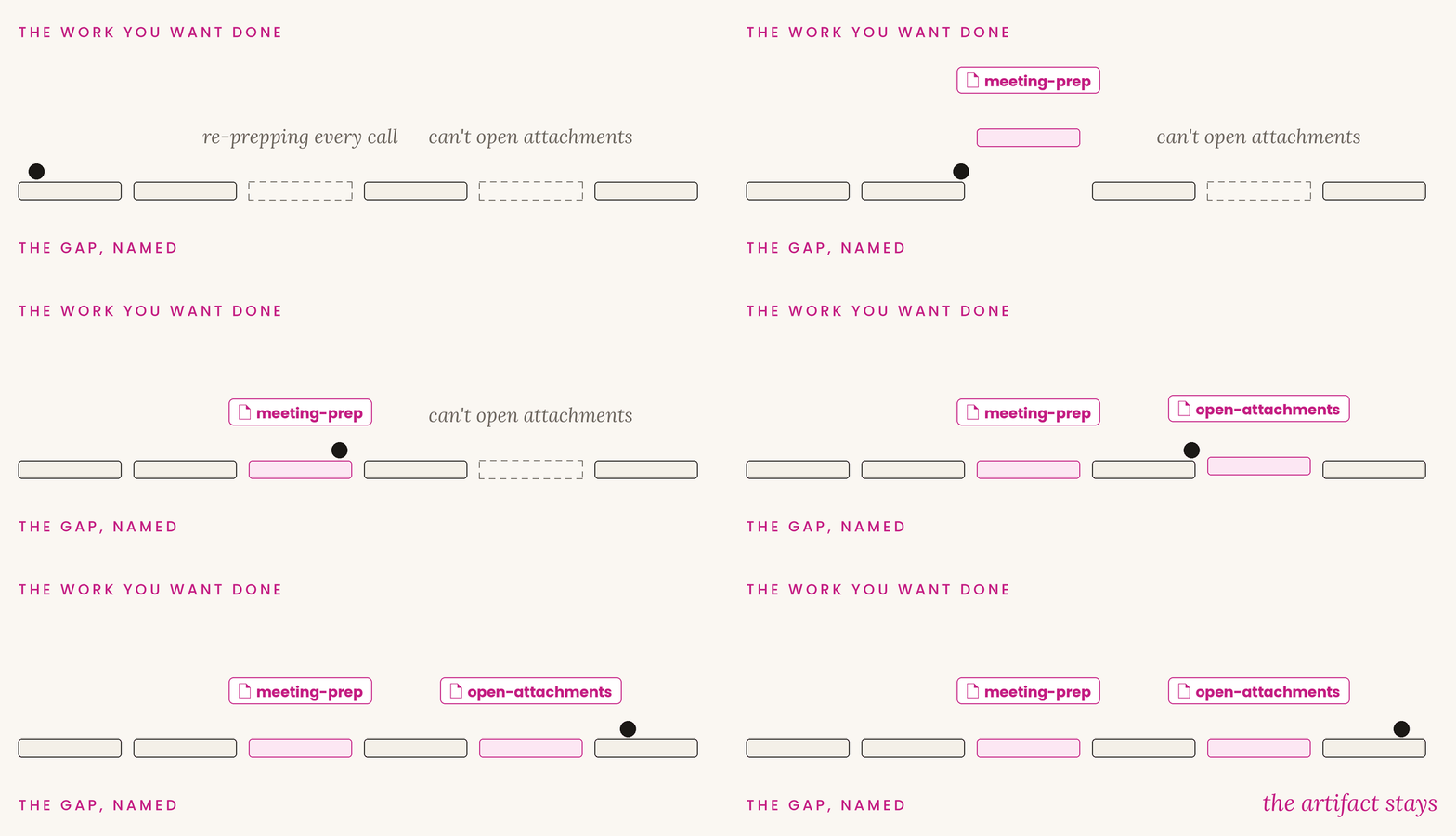
- re-preparing every Zoom becomes meeting-prep
- the file it says it can’t open becomes open-attachments
- a photo of handwritten notes becomes notebook-ingest
My most boring skill went viral.
It reads my receipt emails every Monday and writes me a digest of what I’m paying for. The first run caught a product billing me twice, $31.86 on two different cards, plus a plan I’d forgotten about. Roughly $640 a year.
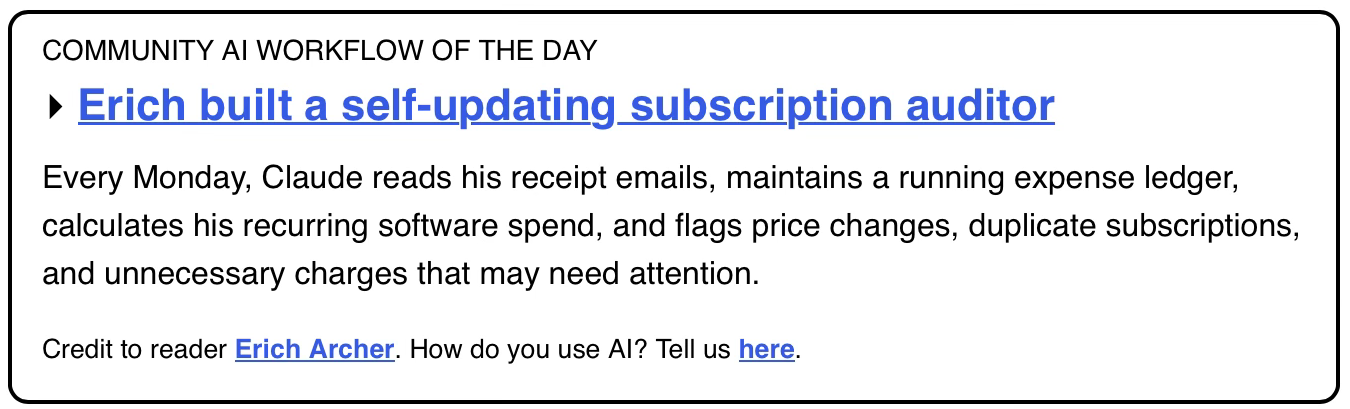
I’ve built a lot of skills for myself and this is the most boring one. A newsletter with 2M readers gave it a feature. To celebrate, I thought I’d give away a few more.
Three free skills.
These come from my own collection. I generalized them so they work for anybody.
- In Claude, open Settings, then Capabilities, then Skills, and paste one in as a new skill. It fires on its own from then on.
Use when: any call is booked with anyone attached to an open deal or decision.
Instructions: Before the call, pull every email thread with the attendees from the last 90 days and read the newest messages in full, not the previews. Check the invite for agenda language. Look up the person and the company. Then produce one page: the single goal of the call in one sentence, what happened last with dates, the ammunition (facts, numbers, and commitments that support the goal), the landmines (open promises, sore spots, anything unresolved), and the first question to ask. One page, no more. This brief is internal and never gets sent to the other side.
Use when: a file you received (email attachment, shared file, scan) needs to get into the AI’s hands and it says it cannot open it.
Instructions: Never let “I can’t open that” end a task. Work the lanes in order. Lane one: save the file to the computer and upload it directly into the chat. Lane two, for email attachments: use Save to Drive on the attachment, then read it from Drive; AI tools that cannot pull a file out of an email can usually read the same file from Drive. Lane three, zips: list the contents first, then extract and read one file at a time. If a lane fails, say which one failed and move to the next.
Use when: given a photo of handwritten notes, a whiteboard, or index cards.
Instructions: Transcribe faithfully. Mark anything uncertain with (?) instead of guessing. When the transcription is done, ask about every (?) item in one list before doing anything else. Then classify each line as a task, an idea, a contact, a number, or a note, and route it to its home: the task list, the calendar, the contact file, the project doc. Finish with a table showing where every item went. A transcription is a mirror, not a destination. Nothing counts until it is routed.
There are more at cgacreative.com/skills.
A skill is a capability gap converted into a durable artifact.
I have a skill when all five of these are true.
- Named. I can say exactly what I could not get done before.
- Written. My real steps are on the page, not in my head.
- Promised. I know what I am getting back before I run it.
- Tested. I ran it on real work, not on an example.
- Triggered. It starts on its own. I never have to remember it exists.
That is the week. My clients and I have more capabilities than we did last week.
Are you still re-explaining the same job to your AI every week? Write it down once. And send this to whoever else is doing it, the three skills above are theirs too.